



If growth is picking up but your payroll budget is not, you are probably thinking about scaling a team without hiring full time. In fact, that challenge is common. According to the U.S. Chamber of Commerce, 42% of small businesses said they could not fill open positions, while hiring delays keep founders and operators stuck in recruiting instead of execution.
Table of Contents
The good news is that growth does not always require immediate full-time headcount. Instead, you can increase output through flexible staffing, better process design, and targeted support in high-friction roles. In this guide, you will learn how this approach works, when it makes sense, which tools help, and how to avoid the mistakes that quietly destroy margin.
What Is Scaling a Team Without Hiring Full Time?
Scaling a team without hiring full time means increasing your company’s capacity without adding permanent local employees right away. In practice, that can include embedded remote team members, offshore staffing, contractors, part-time specialists, shared services, and better workflow systems.
For growing companies, this matters because demand rarely rises in a straight line. One month, you need customer support coverage. Next, you need recruitment coordination, bookkeeping help, or operations support. Therefore, locking in fixed full-time costs too early can reduce flexibility and strain cash flow.
The trend is clear. Flexible work models are now mainstream, and distributed hiring gives you access to wider talent pools at lower fully loaded cost. Moreover, operators are under pressure to grow without bloating overhead. That is why growing your team flexibly has become less of a shortcut and more of a serious operating model.
How It Works
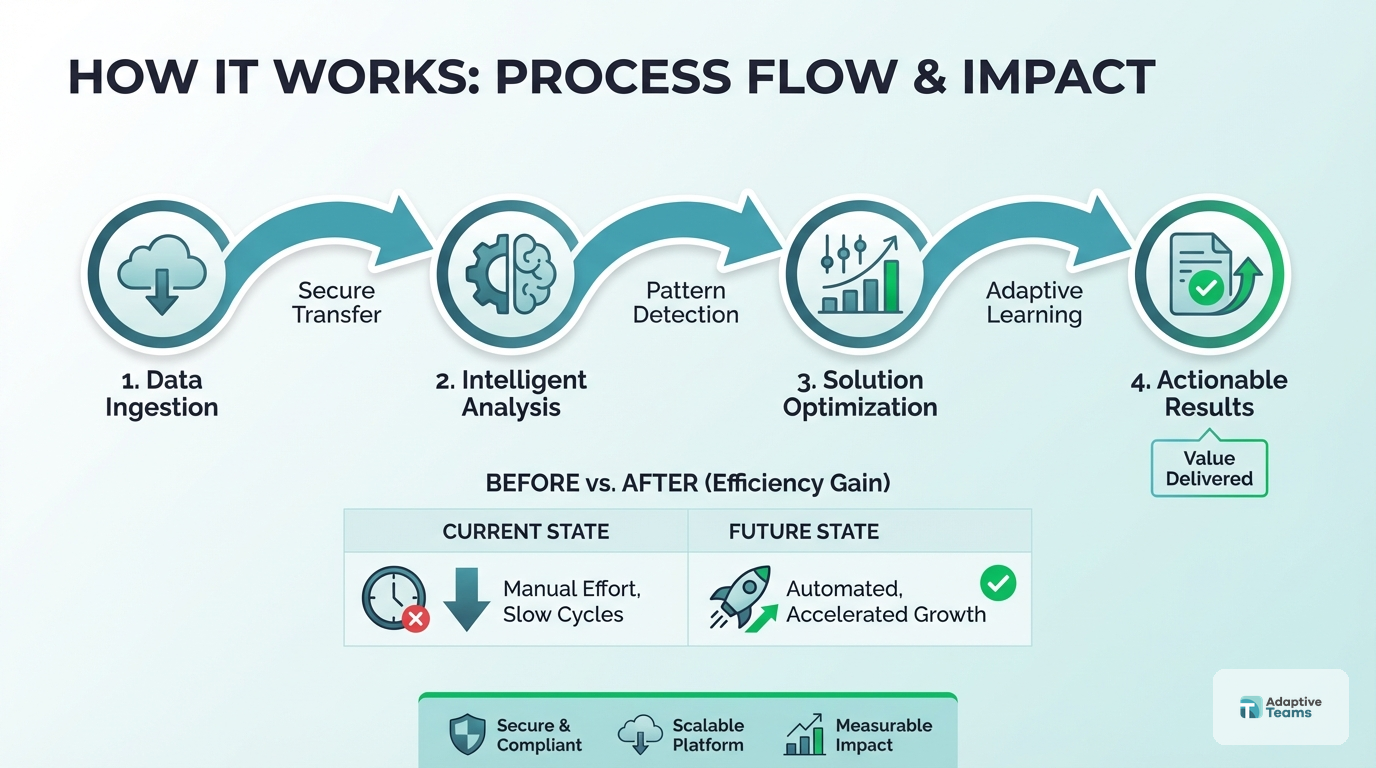
This model works best when you start with workload analysis, not job titles. In other words, you do not ask, “Who should we hire?” You ask, “What work is slowing the business down, and what level of support does it need?”
1. Identify work that does not require a full-time local hire
First, separate strategic work from repeatable execution. Inbox management, reporting, customer support, scheduling, sourcing, payroll admin, and process documentation often do not need a senior in-house employee.
2. Match the task to the right staffing model
Next, assign work to the right model. A recurring function may justify an embedded remote team member. For a niche project, a contractor may be the right fit. A fast-growth operation may need a managed staffing partner that handles recruiting, payroll, compliance, and performance oversight.
3. Build clear ownership and reporting lines
However, flexible staffing only works when accountability is obvious. Each person needs defined outcomes, deadlines, communication norms, and a direct manager.
4. Standardize the workflow
Documented SOPs, templates, and KPIs reduce ramp time. As a result, new team members contribute faster and quality stays more consistent.
5. Review output before expanding
Finally, measure cost, speed, quality, and management load. If one role proves valuable, you can expand capacity without taking on unnecessary permanent overhead.
Key Benefits
When you approach this model strategically, the upside is bigger than simple cost reduction.
Lower fixed overhead
- You avoid committing to full local salary, benefits, taxes, equipment, and office overhead before demand is stable.
Faster access to talent
- According to the Society for Human Resource Management, average time to fill can stretch beyond a month for many roles. Flexible staffing shortens that delay by widening your candidate pool.
Better cash-flow control
- Additionally, you can align team cost to current workload instead of future assumptions. That protects margin during uneven growth.
More operational focus for leadership
- Founders and operators spend less time screening candidates and managing fragmented admin.
Easier market testing
- If you are entering a new channel, service line, or geography, flexible support lets you test demand before building a permanent structure.
Reduced compliance and admin burden
- With the right partner, payroll, HR administration, and documentation are handled for you. Therefore, your internal team avoids a new layer of complexity.
Stronger resilience
- A distributed model can create backup coverage across time zones and reduce the risk of one overloaded in-house team becoming a bottleneck.
Step-by-Step Guide
If you want flexible staffing to improve outp
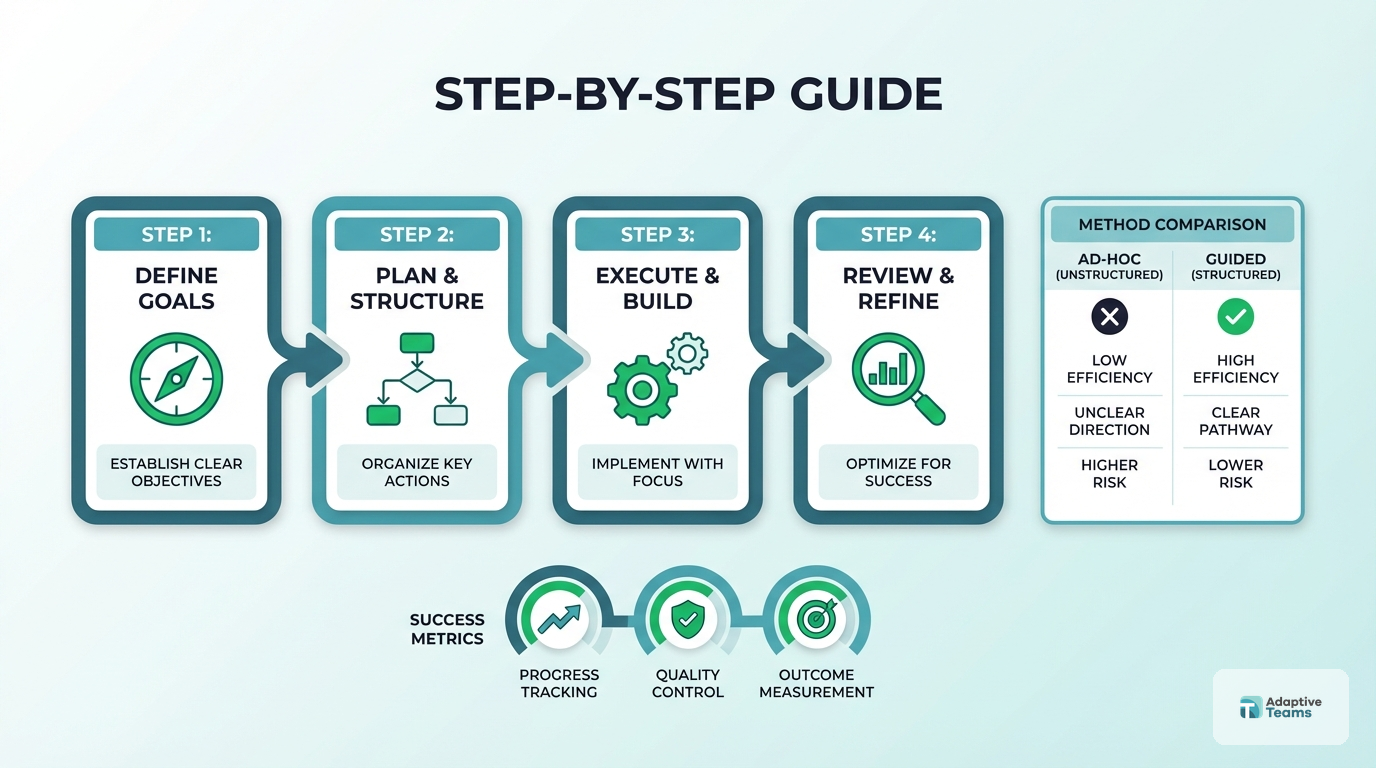
ut instead of creating chaos, follow this sequence.
Step 1: Audit your bottlenecks
First, list the work that repeatedly slows delivery, sales follow-up, finance, recruitment, or customer support. Use simple metrics such as response time, backlog size, missed deadlines, or hours spent by senior staff on low-leverage work.
Step 2: Calculate the real cost of delay
Next, quantify what the bottleneck costs you. For example, a founder spending 10 hours a week on recruiting or admin may be pulling time away from revenue, partnerships, or product delivery. That opportunity cost often exceeds the cost of support.
Step 3: Break roles into tasks
Instead of creating one broad job description, split the work into tasks. Some tasks need process discipline. Others need domain expertise. Consequently, you can decide whether you need a dedicated remote hire, a part-time specialist, or managed team support.
Step 4: Choose the right model
Use a simple decision rule:
- Ongoing and repeatable work: embedded remote team member
- Specialist project work: contractor or consultant
- Multi-step people operations work: managed staffing or HR support
- Short spikes in workload: temporary flexible support
Step 5: Document the operating system
Create SOPs, handoff rules, quality standards, and escalation paths before onboarding. Furthermore, define one owner for every recurring workflow. This cuts training time and reduces confusion in the first 30 days.
Step 6: Start with a focused pilot
Begin with one function, one manager, and one scorecard. For instance, you might start with support ticket handling, recruiter coordination, or bookkeeping prep. A narrow pilot gives you real data before you expand.
Step 7: Track output, not activity
Measure turnaround time, error rate, throughput, and manager time saved. In contrast, vanity measures like “hours available” rarely tell you whether the support model is working.
Step 8: Expand only after the workflow is stable
Once the pilot produces consistent output, add adjacent responsibilities or another team member. This is how flexible growth becomes a system instead of a stopgap.
Scale Your Team Without Payroll Bloat
See where flexible staffing can remove hiring bottlenecks and free up management time.
Best Tools & Resources
The right tools make this approach easier because they reduce coordination drag.
Asana
Asana helps you assign owners, deadlines, and recurring workflows. Therefore, it is useful when you need visibility across distributed contributors.
Slack
Slack keeps fast communication organized by team, project, or function. However, it works best when paired with clear response expectations.
Loom
Loom is ideal for async training and process walkthroughs. As a result, managers spend less time repeating instructions.
Global Payroll and Compliance Platforms
Global payroll platforms support international contractor workflows. They are valuable if you are managing international talent and need more structure around payments, contracts, and local compliance.
Internal process documentation
Your own SOP library is still the most important resource. Without written standards, even strong hires underperform.
Common Mistakes to Avoid
Flexible growth models fail when companies treat them as a shortcut instead of an operating system.
Hiring for tasks you have not defined
If you cannot explain the output, the hire will guess. Consequently, ramp time gets longer and quality drops.
Choosing the cheapest option instead of the right structure
Low-cost freelancers can help in narrow cases. However, if the function is recurring and business-critical, lack of oversight can create missed deadlines, customer issues, and rework.
Keeping accountability with no one
Every role needs a manager, even when the support is part time or remote. Otherwise, priorities drift and nobody notices until results slip.
Ignoring compliance and payroll complexity
If you use international contractors without a clear framework, risk increases. contractor vs employee for startups Misclassification, payment issues, and documentation gaps can become expensive quickly.
Expanding before the first workflow is stable
Many teams add more people before they have one process working. As a result, complexity scales faster than output.
Advanced Tips & Strategies
Once you understand the basics of growing your team flexibly, you can improve performance with a few higher-leverage moves.
Build around pods, not isolated individuals
Instead of adding disconnected support roles, group work into pods such as operations, customer support, or finance admin. This improves handoffs and makes management easier.
Use time-zone coverage strategically
If you serve customers across markets, place support where work can continue after your local team signs off. Therefore, you can shorten turnaround time without asking your core team to work longer hours.
Create role scorecards before onboarding
A simple scorecard should define outcomes, weekly metrics, and failure triggers. In fact, scorecards often expose whether the role should be full time at all.
Pair remote staffing with process cleanup
Do not layer people onto broken systems. First, remove unnecessary approvals, duplicate reporting, and unclear handoffs. Then add capacity. That sequence improves ROI.
Reinvest saved founder time into growth
The real return is not only payroll efficiency. It is what leadership can do with recovered time. For example, you may be able to increase sales activity, improve delivery, or launch a new offer faster.
Frequently Asked Questions
Is scaling a team without hiring full time only for startups?
No. Startups benefit from flexibility, but established agencies, SaaS companies, and e-commerce brands use the same model to protect margin and reduce management overload during growth phases.
What roles are easiest to scale without hiring full time?
Operations support, customer support, admin, recruiting coordination, bookkeeping prep, and other process-heavy roles are often the easiest places to start because the work can be standardized.
Is scaling a team without hiring full time cheaper than hiring employees?
Usually, yes, but the bigger win is flexibility. You reduce fully loaded fixed cost while gaining the ability to match support to actual demand.
How do you maintain quality with remote or flexible team members?
Quality improves when you use SOPs, clear KPIs, structured onboarding, and regular management check-ins. Without those elements, any staffing model will underperform.
When should you move from flexible support to full-time hiring?
You should consider a full-time hire when the workload is stable, strategically important, and heavy enough to justify fixed cost over the long term.
What is the biggest risk in scaling a team without hiring full time?
The biggest risk is poor structure. If ownership, process, and compliance are unclear, cost savings disappear through rework, delays, and management friction.
Next Steps
If your company is growing, waiting for the “perfect” full-time hire can become an expensive habit. A better approach is to identify the work slowing you down, match it to the right support model, and build a system that increases output without locking you into unnecessary fixed overhead.
Ultimately, this flexible staffing model gives you room to grow with less drag. If you want a practical plan for remote staffing, recruiting, payroll, and performance management, Book a free staffing consultation. You will leave with a clearer path to capacity, lower overhead, and faster execution.
Ready to Build Your Dream Team?
Book a free staffing consultation with our remote team specialists. No obligations, just actionable insights for scaling your operations.
Related reading: HR Outsourcing for Small Business.