


Introduction
HR outsourcing for small business becomes urgent the moment your team starts growing faster than your internal processes. According to the U.S. Small Business Administration, people management, compliance, and hiring admin can quickly consume owner time that should go toward growth, delivery, and customer retention. In other words, the smallest teams often feel HR drag the fastest.
Table of Contents
In this guide, you will learn what HR outsourcing for small business actually includes, how it works, which benefits matter most, and how to choose a setup that reduces overhead instead of creating another vendor to manage.
What Is HR Outsourcing for Small Business?
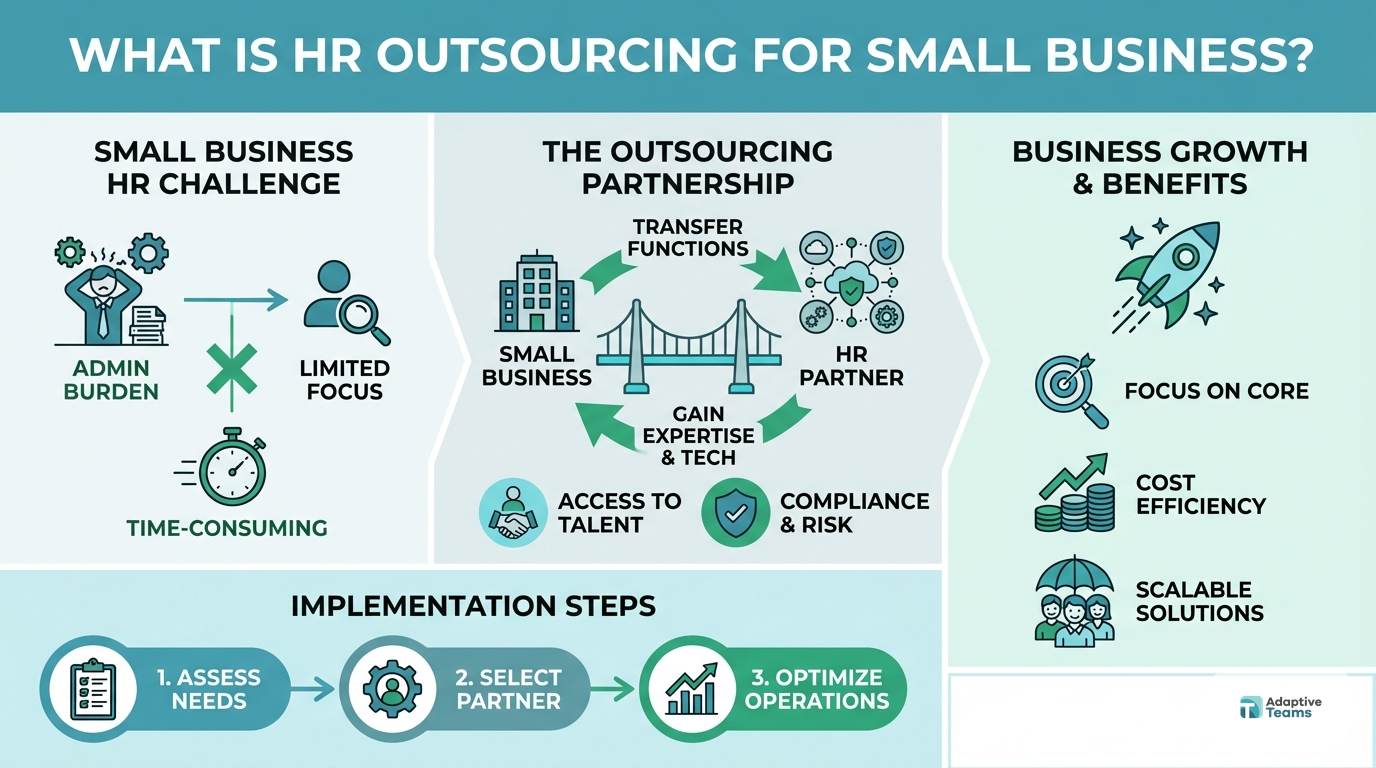
HR outsourcing for small business means handing some or all people operations to an external partner instead of building every HR function in-house. Strong outsourced HR support can include recruiting, onboarding, payroll coordination, policy management, compliance support, employee documentation, performance management, and offboarding.
For a small company, this matters because HR complexity rises faster than headcount. For example, you may go from 8 employees to 25 employees quickly. However, your internal systems usually lag behind. As a result, founders and operators end up handling hiring, contracts, payroll questions, and employee issues in between everything else. That is exactly where external HR support creates leverage.
The trend is clear. Small businesses want support that is more operational than advisory. Additionally, they do not just need a consultant who sends a template. Instead, they need an HR model that helps execute day-to-day workflows reliably. That is especially true for companies building distributed teams, where onboarding, payroll, compliance, and performance management all need tighter structure.
How It Works
This model usually works as a shared operating model. You keep control of your team and business goals. Meanwhile, an external partner handles the HR processes, systems, and execution layers that would otherwise sit on your plate. Effective outsourced HR should feel operational, not abstract.
1. You define the support scope
First, you decide what you want to outsource. Some businesses only need payroll and compliance support. Others need help across recruiting, onboarding, documentation, and performance workflows.
2. The partner audits your current setup
Next, the provider reviews your contracts, policies, employee records, hiring process, and management gaps. This step matters because most HR issues are process issues first.
3. Core workflows are documented
Then, your partner creates or improves core HR processes. For example, they may standardize offer letters, onboarding checklists, leave policies, payroll handoffs, and manager escalation paths.
4. Tools and ownership are assigned
After that, responsibilities get split clearly. You may approve hires and compensation decisions, while the outsourcing partner manages execution, reminders, records, and reporting.
5. Ongoing support becomes routine
Finally, the relationship shifts from one-off fixes to steady operations. That includes recurring hiring support, employee lifecycle admin, compliance monitoring, and performance review coordination.
In practice, the best outsourced HR arrangement feels less like buying a help desk and more like installing an operating layer. Therefore, you should expect defined SLAs, named contacts, reporting cadence, and clear accountability.
Key Benefits
The best reason to use third-party HR services is not convenience. It is leverage. You remove low-value admin from
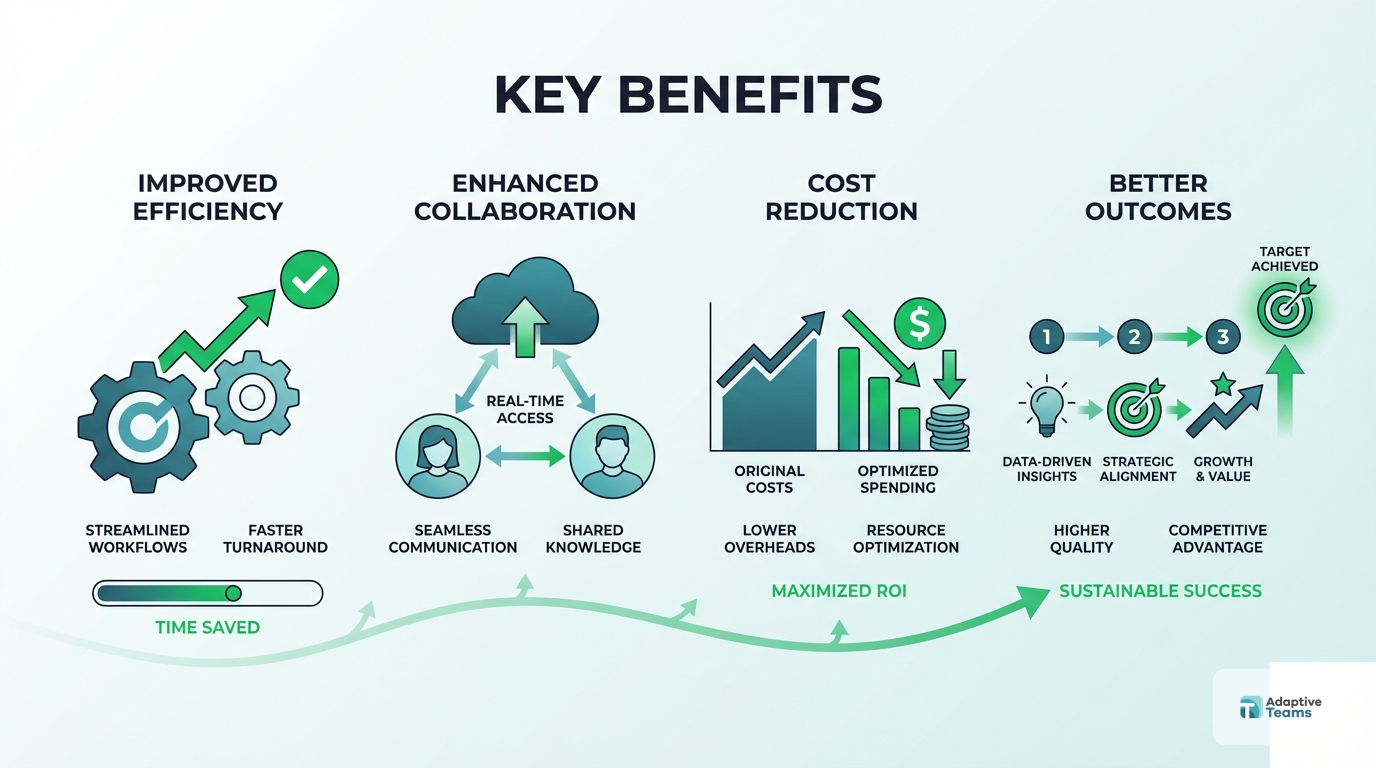
leadership while improving consistency in a business function that affects hiring speed, retention, and risk. That is why smart outsourced HR supports both operations and growth.
Lower founder and operator time drain
According to SCORE, small business owners often spend significant time on non-core admin. HR is a major contributor. Outsourcing reduces the hours you spend chasing paperwork, policies, and employee questions.
Better compliance coverage
However, employment rules do not get simpler because your company is small. Wage rules, classification, documentation, and local labor requirements still apply. Therefore, external HR support can reduce avoidable mistakes before they become expensive.
Faster hiring execution
When recruiting, interview coordination, and onboarding are structured, roles fill faster. That directly affects growth. A delayed hire often means slower delivery, missed sales capacity, or more manager overload.
More consistent employee experience
Additionally, employees notice when onboarding is organized, payroll is predictable, and issues get handled quickly. Consistency improves trust, which supports retention.
Stronger documentation and reporting
Good HR outsourcing partners centralize records, workflows, and decisions. That makes audits easier and reduces the chaos of searching across inboxes, spreadsheets, and chat threads.
Easier scaling across markets
If you are building remote or offshore teams, outsourcing can simplify payroll coordination, compliance processes, and local employment admin.
Lower total operating cost than building internally too early
A full in-house HR hire can be justified later. However, for many small businesses, outsourcing is the cheaper and faster way to get mature HR infrastructure before headcount supports a full internal department.
Step-by-Step Guide
If you want outsourced HR to work, you need a practical rollout plan. The wrong setup creates more vendor management. The right setup removes friction immediately.
Step 1: Audit your current HR bottlenecks
List every recurring HR task that leadership or operations touches each month. Include hiring, contracts, onboarding, payroll coordination, policy updates, leave tracking, and employee issues.
Step 2: Separate strategic work from admin work
Next, decide what must stay internal. Compensation philosophy, culture decisions, and org design usually stay with leadership. On the other hand, document management, workflow execution, and recurring admin are often ideal to outsource.
Step 3: Choose the right outsourcing model
Some providers offer advisory-only support. Others provide embedded execution. For most growing companies, execution support creates more value because it removes workload instead of just creating recommendations.
Step 4: Map the employee lifecycle
Document your process from hiring request to offboarding. Include who owns each step, where delays happen, and what tools are used. This map will show you where external HR support can create the biggest time savings.
Step 5: Standardize your core documents
Before you hand work to a partner, clean up your basic templates. That includes contracts, offer letters, onboarding checklists, performance review forms, and policy documents.
Step 6: Set clear service levels and owners
Define response times, approval rules, escalation paths, and reporting cadence. For example, decide who approves new roles, who signs off on payroll changes, and how policy questions get escalated.
Remove HR Drag Before It Compounds
See how a managed staffing and HR model can help you hire faster, stay compliant, and free up operator time.
Step 7: Integrate HR with hiring and performance systems
HR should not sit alone. It should connect to recruiting, onboarding, payroll, and performance management. Otherwise, you end up outsourcing a silo instead of improving the full employee lifecycle.
Step 8: Review results every 30 to 60 days
Finally, track outcomes. Look at days to fill roles, onboarding completion, payroll issue rate, employee retention, and leadership hours saved. If those numbers do not improve, the setup needs adjustment.
Best Tools & Resources
The right tools make outsourced HR easier to manage. However, tools only help when ownership is clear.
HRIS platform
A system like BambooHR or HiBob helps centralize employee data, onboarding tasks, and documentation. Therefore, it becomes easier to keep records clean and accessible.
Payroll and workforce management
Payroll platforms like Gusto simplify payroll, contractor payments, and cross-border workforce admin. This is especially useful if you hire remotely.
Compliance guidance
The U.S. Department of Labor offers a useful starting point for small-business employment obligations. In addition, local counsel or country-specific partners may be necessary for international hiring.
Performance management workflows
A lightweight performance process matters more than a complex one. If you want structure, use simple review templates and manager check-ins tied to role outcomes.
Embedded staffing and HR partners
For many operators, the highest-value resource is not software. It is a partner who combines recruiting, HR management, payroll coordination, and ongoing performance support in one operating model.
Common Mistakes to Avoid
Many companies adopt external HR support too late or in the wrong format. As a result, they pay for support but keep the same internal friction.
Mistake 1: Outsourcing only the symptoms
If your hiring process is broken, adding payroll support will not solve the real issue. You need to look at the full system, not just one painful task.
Mistake 2: Picking the cheapest provider
Low-cost support often means reactive support. That may work for basic admin. However, it rarely helps with scaling, retention, or remote team structure.
Mistake 3: Keeping ownership unclear
If managers, founders, and the external provider all assume someone else owns a task, errors follow. Payroll updates get missed. Onboarding stalls. Employee questions sit unanswered.
Mistake 4: Ignoring change management
Even good systems fail when managers do not use them. Therefore, explain new workflows, approval paths, and expectations early.
Mistake 5: Treating HR as separate from operations
HR affects delivery capacity, margin, and team stability. If you isolate it from operational planning, you miss most of its business value.
Advanced Tips & Strategies
Once the basics are in place, you can make outsourced HR more strategic. This is where outsourcing stops being admin support and starts improving operating performance.
Build role scorecards before you hire
First, define success for each role before recruitment starts. Include outcomes, KPIs, and communication expectations. That improves hiring quality and onboarding speed.
Use a 30-60-90 day onboarding model
Next, connect onboarding to measurable milestones. New hires should know what success looks like in the first 30, 60, and 90 days. This reduces ramp confusion and gives managers a clear coaching structure.
Track retention by manager and function
Moreover, retention is not just an HR metric. It is an operations metric. If turnover clusters under one manager or team, you need to fix the management system, not just refill roles.
Combine recruiting and HR operations
Recruiting without operational follow-through creates waste. Therefore, align sourcing, onboarding, payroll, and performance management under one execution model whenever possible.
Review workforce design quarterly
Finally, revisit whether each role should be local, remote, offshore, full-time, or fractional. Workforce design decisions have major impact on speed, cost, and resilience. dedicated remote team members
Frequently Asked Questions
What is HR outsourcing for small business?
HR outsourcing for small business is the practice of using an external provider to handle HR tasks such as hiring support, onboarding, payroll coordination, policy management, compliance processes, and employee documentation. The goal is to reduce admin load while improving operational consistency.
Is HR outsourcing worth it for a small business?
Yes, it often is, especially when leadership is spending too much time on people admin or when growth is creating more hiring and compliance complexity. The value comes from time saved, risk reduced, and better process execution.
Which HR functions should a small business outsource first?
Most small businesses should start with the most repetitive and risk-sensitive tasks. That usually means payroll coordination, onboarding workflows, documentation, compliance support, and recruiting operations.
How much does HR outsourcing for small business cost?
Costs vary by scope, headcount, geography, and service model. Advisory-only support is usually cheaper, but embedded execution often delivers better ROI because it removes more internal workload and reduces errors.
Can HR outsourcing help with remote teams?
Yes. In fact, it is often more useful for remote teams because distributed hiring, onboarding, payroll coordination, and performance management require stronger systems than co-located teams usually need.
What is the difference between HR outsourcing and a PEO?
HR outsourcing can cover selected services without changing your full employment structure. A PEO usually offers a co-employment model and bundles benefits, payroll, and compliance support more formally. The right option depends on your team size, risk profile, and growth plan.
Next Steps
HR outsourcing for small business works best when you treat it as infrastructure, not a patch. If your team is growing, your HR load will grow faster than you expect. Therefore, waiting too long usually means more founder distraction, slower hiring, and more process debt.
Start by identifying where your current people operations create the most friction. Then choose a model that combines recruiting, HR support, payroll coordination, and performance management into one clear system. If you want help building a remote or offshore team with less operational overhead, book a free staffing consultation at Adaptive Teams.
Conclusion
Ultimately, Outsourced HR gives you a way to scale people operations before internal complexity starts slowing the company down. When the right partner owns execution, you get cleaner systems, faster hiring, fewer compliance gaps, and more time for work that grows revenue. The key is choosing outsourced HR as an operating advantage, not just an admin shortcut.
Ready to Build Your Dream Team?
Book a free staffing consultation with our remote team specialists. No obligations, just actionable insights for scaling your operations.