



Introduction
If you are building a startup, one hiring decision can shape your burn rate, execution speed, and compliance risk for the next 12 months. That decision is contractor vs employee for startups. According to the U.S. Small Business Administration, labor costs are often one of the biggest expense categories for small companies, while hiring mistakes can also trigger tax penalties, back pay, and lost momentum.
Table of Contents
However, the right answer is rarely ideological. It is operational. You need to know when flexibility helps, when control matters more, and when the wrong setup creates drag you cannot afford. In this guide, you will learn how contractor vs employee for startups works, what each model costs, where founders get it wrong, and how to choose a setup that supports growth without creating legal or management chaos.
What Is Contractor vs Employee for Startups?
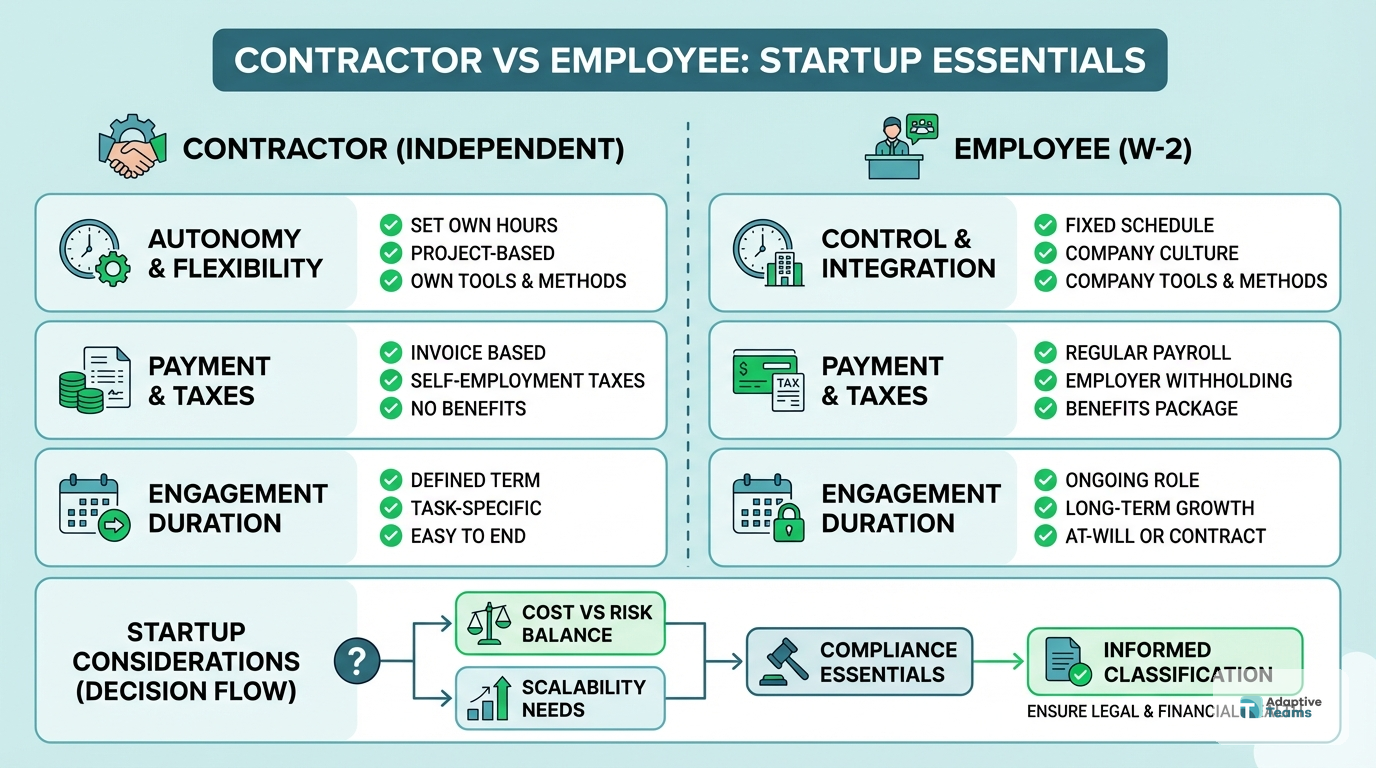
Contractor vs employee for startups refers to the decision between engaging someone as an independent contractor for defined work or hiring them as an employee under your company’s control and payroll structure. Although both options help you get work done, they create very different obligations around supervision, taxes, benefits, intellectual property, and long-term accountability.
For example, an employee usually works inside your systems, follows your schedule, and supports an ongoing company function. In contrast, a contractor typically delivers a scoped outcome, uses their own methods, and operates with more independence. The U.S. Department of Labor and IRS both emphasize substance over labels, which means calling someone a contractor does not make them one if you control the job like an employer.
Therefore, this contractor vs employee for startups decision matters because early-stage companies need speed, but they also need clean operating foundations. If you misclassify talent, you may save money in month 1 and lose much more in month 12. HR outsourcing for small business
How It Works
The contractor vs employee for startups decision works best when you evaluate the role before you hire, not after the work begins. In other words, you should decide based on the nature of the work, level of control, expected duration, and risk profile.
1. Define the business need
First, identify whether you need a permanent function or a short-term output. If you need ongoing sales operations, customer support, or team leadership, an employee model often fits better. If you need a website redesign, legal review, or one-off implementation, a contractor model may be more appropriate.
2. Assess control and integration
Next, ask how much control you need over schedule, process, tools, and performance. Employees typically work within your internal systems and management structure. Contractors usually control how they complete the work.
3. Map the legal and tax implications
Additionally, review local labor rules, tax withholding requirements, and benefits obligations. For example, in many jurisdictions, employees require payroll tax handling and statutory protections, while contractors need clear service agreements and classification support.
4. Compare total cost, not hourly cost
A contractor’s hourly rate may look higher or lower depending on region and specialty. However, the real comparison includes management time, onboarding, benefits, payroll admin, and replacement risk.
5. Choose the operating model
Finally, document the decision. Use an employment agreement if the role is embedded and ongoing. Use a contractor agreement if the work is project-based and independently delivered.
Key Benefits
When you handle contractor vs employee for startups correctly, you gain more than legal clarity. You also improve how your comp
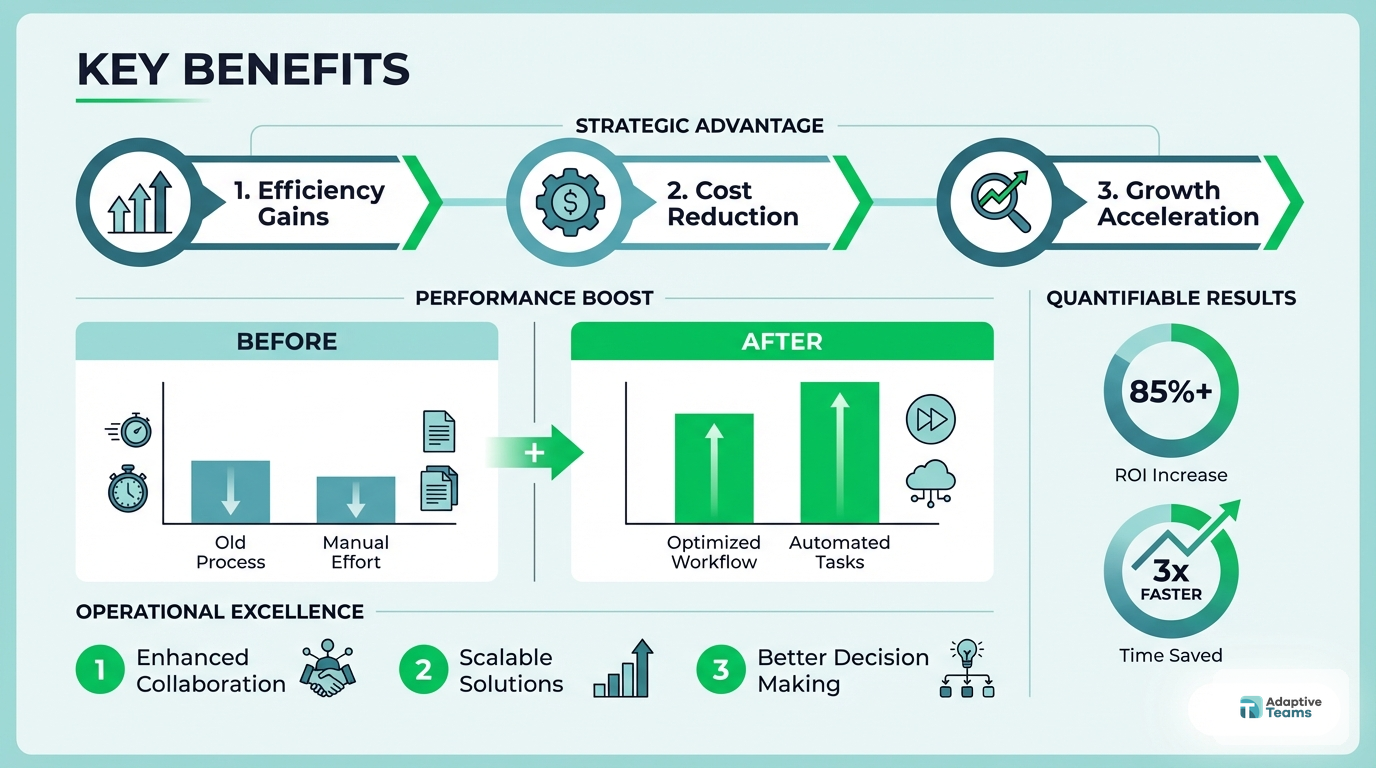
any scales.
Better hiring speed
First, contractors can help you move quickly when you need specialized capacity fast. This can be useful during launches, migrations, or short growth sprints.
Stronger team continuity
Additionally, employees usually create more continuity for core roles. They stay inside your systems, build institutional knowledge, and support repeatable execution.
Clearer cost planning
Moreover, choosing the right contractor vs employee for startups model improves forecast accuracy. You can budget projects separately from headcount and avoid mixing flexible spend with core payroll.
Lower compliance exposure
If you classify talent correctly, you reduce exposure to fines, tax disputes, and retroactive benefits claims. That matters because startup legal clean-up is expensive and distracting.
Better performance management
Employees are easier to coach against long-term KPIs. Contractors, by contrast, are better measured against deliverables and milestones. Matching the model to the work makes accountability simpler.
More strategic use of founder time
Finally, the right contractor vs employee for startups setup reduces management drag. You spend less time fixing role confusion and more time on product, growth, and customers.
Step-by-Step Guide
Use this process if you want a practical framework for contractor vs employee for startups.
Step 1: Separate core roles from specialist work
First, list the roles your startup cannot function without for the next 12 months. These are often better employee candidates. Then list project-based or highly specialized tasks that may fit a contractor model.
Step 2: Score the role on 4 decision factors
Next, score the role from 1 to 5 on duration, control, confidentiality, and strategic importance. Higher scores usually point toward an employee relationship because the work is more embedded in your business.
Step 3: Estimate fully loaded cost
Then compare true costs. For employees, include salary, taxes, benefits, equipment, management time, and replacement cost. For contractors, include project fees, internal review time, contract management, and any rework risk.
According to the U.S. Bureau of Labor Statistics, benefits can add a meaningful percentage on top of wages, which is why a salary-only comparison often underestimates employee cost. However, a contractor who requires constant founder oversight can become more expensive than expected. That is why contractor vs employee for startups should be measured with a full operating-cost lens.
Step 4: Review classification rules before hiring
Additionally, check the legal tests in the countries where the work happens. In the U.S., the IRS and Department of Labor look at behavioral control, financial control, and relationship factors. Internationally, many countries use similar substance-based tests.
Step 5: Protect IP and confidentiality early
Next, make sure contracts address intellectual property, confidentiality, data access, and termination terms. Startups often overlook this with contractors, especially in technical or creative work.
Step 6: Build the right management system
If you hire an employee, create onboarding, reporting lines, KPIs, and review cycles. If you engage a contractor, define scope, deadlines, acceptance criteria, and communication rhythms. In other words, do not manage both models the same way.
Step 7: Reassess at growth milestones
Finally, revisit the contractor vs employee for startups setup every quarter or after major funding, product, or market changes. A contractor relationship that made sense at pre-seed may need to convert into an employee role once the work becomes central to daily operations.
Choose the Right Hiring Structure Faster
Get a practical staffing plan that balances speed, compliance, and long-term team performance.
Best Tools & Resources
The right resources make contractor vs employee for startups easier to evaluate and manage.
IRS guidance on worker classification
First, the IRS worker classification guidance helps you assess tax treatment in the U.S. It is a strong baseline if your startup hires American talent.
U.S. Department of Labor resources
Additionally, the U.S. Department of Labor explains misclassification risk and enforcement logic. This is useful when a role sits in a gray area.
International Hiring Workflow Tools
Moreover, international payroll and compliance platforms help companies manage contracts, payroll, and country-specific employment administration. They are especially useful when you hire across borders. A dedicated staffing partner like Adaptive Teams handles this complexity for you.
Internal operating playbooks
Your own SOPs matter too. For example, role scorecards, onboarding checklists, and KPI frameworks reduce ambiguity. offshore staffing solutions how to manage remote employees effectively
Common Mistakes to Avoid
Startups usually do not fail the contractor vs employee for startups decision because they lack opinions. They fail because they skip structure.
Treating cost as the only factor
First, many founders compare only headline rate. However, the cheaper option on paper can create more management burden, weaker accountability, and higher compliance exposure.
Misclassifying a full-time role as a contractor
If someone works like an employee, manages like an employee, and depends on you like an employee, labeling them a contractor will not protect you. Consequently, you may face back taxes, penalties, or contract disputes later.
Using vague agreements
Additionally, unclear contracts cause friction fast. Without scope, deliverables, IP terms, and communication norms, performance issues become harder to solve.
Keeping contractors too long in core roles
A contractor can be a smart bridge. Nevertheless, once the role becomes mission-critical, long-term reliance often creates knowledge gaps and continuity risk.
Managing everyone the same way
Finally, founders often apply employee-style supervision to contractors or contractor-style ambiguity to employees. Both approaches reduce performance and create frustration.
Advanced Tips & Strategies
Once you understand the basics of contractor vs employee for startups, you can make the model work harder for your business.
Build a role architecture before headcount grows
First, define which roles are core, support, specialist, and experimental. This creates a repeatable decision framework instead of one-off hiring calls.
Use contractors to validate demand, then convert strategically
Additionally, contractors are effective for testing channels, markets, or functions before you commit to permanent headcount. Once a workflow proves stable, you can transition the role into an employee seat with better confidence.
Centralize compliance and people operations
If you hire internationally, use a structured HR operations layer rather than scattered local arrangements. This reduces founder involvement and improves consistency across payroll, contracts, and performance reviews.
Track hiring model ROI
Moreover, measure time-to-fill, ramp time, manager hours, retention, output quality, and replacement cost by hiring model. Over time, you will see where contractors create speed and where employees create leverage.
Design for continuity, not just speed
Finally, every startup wants speed. In contrast, strong operators also design for handoffs, retention, documentation, and long-term accountability. That is where the right contractor vs employee for startups decision often pays off.
Frequently Asked Questions
Is it better to hire a contractor or employee in a startup?
It depends on the role. If you need a defined outcome, short-term specialist skill, or flexible capacity, a contractor may fit. If you need long-term ownership, daily oversight, and embedded team contribution, an employee is usually the better choice.
Are contractors cheaper than employees for startups?
Sometimes, but not always. Contractors can reduce benefits and payroll overhead, yet they may charge higher rates and require more careful scope control. Employees often cost more in direct overhead, but they can create stronger continuity and lower rework over time.
What is the biggest risk of using contractors?
The biggest risk is misclassification. If a contractor functions like an employee under local law, your company may face taxes, penalties, back pay, and legal disputes.
When should a startup convert a contractor to an employee?
You should consider conversion when the role becomes ongoing, central to operations, tightly managed, or critical to customer delivery. Those signals suggest the work is no longer a temporary external service.
Can startups hire international contractors instead of employees?
Yes, many do. However, you still need compliant contracts, IP protection, tax awareness, and clear operating boundaries. Cross-border hiring does not remove classification risk.
How do you decide faster without making a bad hire?
Use a simple role scorecard that evaluates duration, control, strategic importance, and confidentiality. Then compare fully loaded cost and legal risk before you decide.
Next Steps
The contractor vs employee for startups decision should not be based on guesswork or headline cost alone. Instead, you need to match the hiring model to the work, the level of control, and the long-term role of that person in your business. When you do that, you move faster without creating hidden compliance or management debt.
If you are planning your next hires, start by mapping which roles are core and which are specialist. Then build the right infrastructure around onboarding, contracts, payroll, and performance management. If you want help designing that system, book a free staffing consultation at https://adaptiveteams.co/services/.
Ready to Build Your Dream Team?
Book a free staffing consultation with our remote team specialists. No obligations, just actionable insights for scaling your operations.